Music analysis: Why fans are finally wearing earplugs to concerts
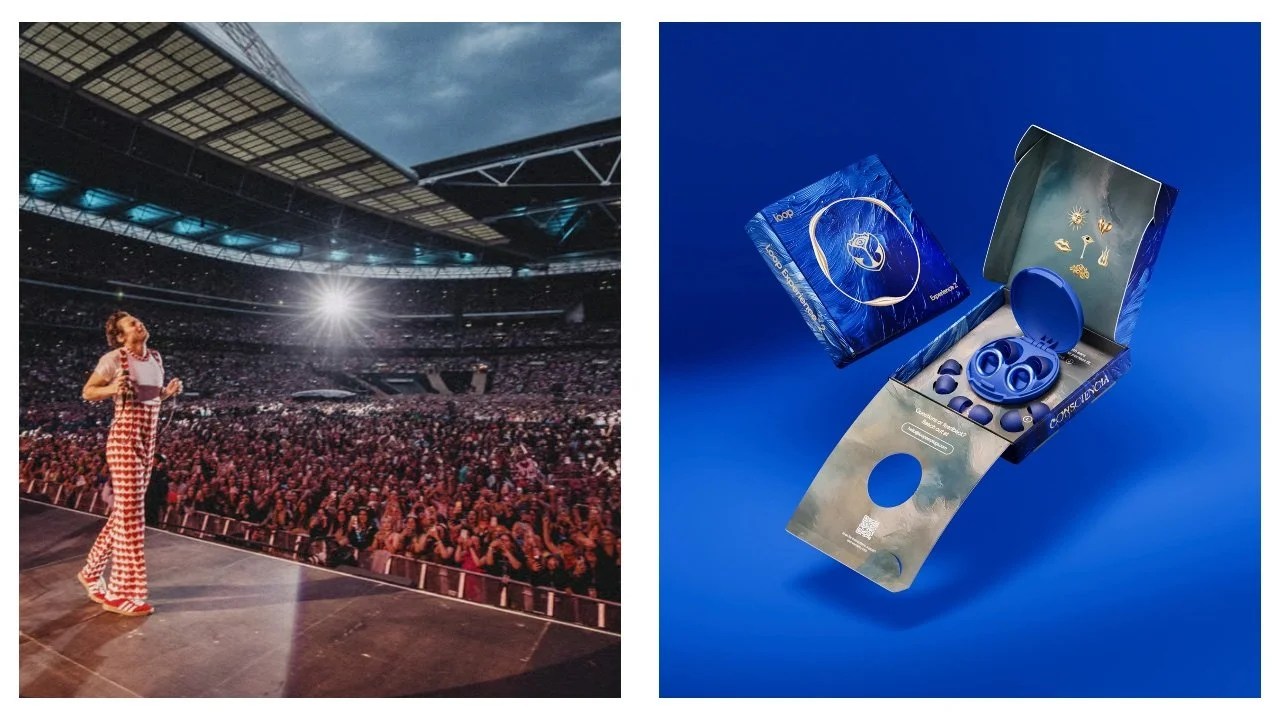
Whether it’s for Harry Styles at Wembley or this summer's biggest festivals, earplugs have become one of live music's most unexpected accessories as fans discover they don't have to sacrifice their hearing to enjoy the show.
With festival season in full swing and BTS preparing to return to UK stages, plenty of fans are adding a pair to their concert bags, writes Music News Blitz’s Zinhle Radebe.
A new must-have accessory
Alongside friendship bracelets, tour merchandise and cowboy boots, music fans are increasingly turning up wearing earplugs.
They aren’t the bright orange foam plugs once handed out at venues, but rather sleek V-shaped earplugs that look more like jewellery or wireless earbuds.
Once considered unnecessary or uncool, earplugs now appear everywhere, from major festivals to intimate club gigs.
They have become another concert essential, joining tickets, portable chargers and reusable water bottles.
Why are fans suddenly wearing them?
Have you ever come home from a gig with ringing ears, or climbed into bed after standing beside the speakers only to realise that everything sounds strangely distant?
Most people expect it to disappear after a night's sleep.
However, more fans are starting to question whether ringing ears should simply be accepted as the price of a good gig.
At BBC Radio 1's Big Weekend, 21-year-old Amira said conversations about hearing protection are becoming much more common among her friends.
"I think it's more of a common thing coming up," she told BBC Newsbeat.
Festival worker Paula says she never attends a live music event without earplugs after spending so much time around festival stages.
"They drown out the crowd a little bit and bring down the bass because sometimes it can be really overwhelming and you can't hear properly," she said.
For many fans, that's the biggest surprise.
Modern earplugs don't block the music; They simply lower the volume, making performances more comfortable without taking away the experience.
More than a social media trend
Brands like Loop, Alpine and Hears have transformed hearing protection into something fans actually want to wear.
Their reusable designs come in different colours and finishes that blend into outfits instead of standing out.
Loop has even partnered with major festivals including Coachella and Tomorrowland.
But there's more behind the trend than clever marketing; Alpine CEO Arthur van Keeken believes younger music fans are becoming more aware of hearing health.
He hopes ear protection will eventually be viewed the same way skiers view helmets: something you simply wouldn't go without.
Health experts have been making the same point for years.
According to the British Academy of Audiology, prolonged exposure to sounds above 85 decibels can damage hearing.
Concerts and festivals regularly reach between 90 and 120 decibels, depending on the venue, the performance and how close you are to the speakers.
The Royal National Institute for Deaf People (RNID) estimates hearing loss affects around one in three UK adults.
Why hearing protection matters
Ringing ears after a concert might seem normal, but the condition is known as tinnitus.
While it often fades after a few hours, repeated exposure can permanently damage the tiny sound-sensing hair cells inside the ear, which never grow back.
Franki Oliver, audiology manager at the RNID, compares those delicate cells to grass after a busy festival weekend.
"The first day, the grass looks absolutely beautiful," she says. "By the end of the weekend it's looking pretty dead and it's probably not coming back.”
"The same thing is happening with our ears when we expose them to loud noises."
Audiologists also recommend a simple rule: If you have to raise your voice for the person next to you to hear you, the music is loud enough to warrant hearing protection.
READ MORE: Music analysis: Where to start listening to classical piano pieces

Not all earplugs are created equal
The foam earplugs available at many venues reduce sound effectively, but they can also flatten vocals and instruments.
Unlike standard foam plugs, high-fidelity earplugs reduce harmful noise levels without sacrificing performance clarity.
Experts also recommend checking the Single Number Rating (SNR), which measures how much sound an earplug reduces, and making sure the ear tips fit properly.
Without a proper seal, even the best earplugs won't provide effective protection.
A trend that's here to stay
Professional musicians and DJs have relied on hearing protection for years because their careers depend on it.
Fans are now following their lead.
Radio 1 DJ Sarah Story says she's pleased earplugs are becoming more common in live venues but believes awareness can still improve.
The Future Dance host, who has performed club seasons in Ibiza, has worn earplugs since she was 19 after her brother developed tinnitus through repeated exposure to loud music.
"I do believe they actually saved my hearing," she says.
Story says earplugs also improve the live music experience in unexpected ways.
"When you wear them, you can just talk at a normal level and you don't end up losing your voice. I used to lose my voice all the time when I was out."
Concert checklists are constantly changing.
Alongside wallets, IDs, phone straps and digital cameras, it’s fair to say that earplugs have earned a place on the packing list.
The best concerts stay with you long after the lights come up.
Clearly, more fans are making sure their hearing does too.
READ NEXT: Charli XCX past, present and future: New album and movie on the horizon