

The age of recycling in the world of music: Sampling
Music is in an age of recycling, where new sounds incorporate the old, and tradition is repackaged as invention.
There is a growing trend in pop music where artists seem to pluck the strings of nostalgia when curating new bodies of work.
Familiar tunes, familiar voices, echoes of famous songs that came before them.
As we look to the charts right now, and the trajectory of music going forwards, it can be said that we are witnessing the rise of sampling in music.
Music News Blitz’s Isaac James breaks down everything you need to know.
Artists dabble in sampling
Some of the biggest artists at present have dabbled in sampling with varying success.
The biggest risk when it comes to the practise is that your new body of work is bound to be compared to the original that you are borrowing from.
The line between a sampling being born of artistic interpretation or laziness and simplicity is easily defined in the eyes of listeners, and can be a dangerous tightrope to navigate for artists hoping to chart.
David Guetta and Bebe Rexha suffered critique for their reimagining of Eiffel 65’s “Blue (Da Ba Dee)” in 2022 with their release of “Im Good (Blue)” which listeners described as lazy and uninspired.
The is unlike TV Girl, a band that uses niche and archival sound bites to underpin their songs.
TV Girl’s albums centralise storytelling and narratives in their work, and carefully choose samples that relay and recontextualise the meanings of their songs.
The spoken word dialogue heard in songs like “Lover’s Rock” and “Cigarettes Out the Window” use vintage films to look at the themes of love and its complexities.
Meanwhile, their album “Who Really Cares” frequents more varied sources such as presidential speech soundbites and slam-poetry from the Yeastie Girlz.
TV Girl, whilst amassing almost 24 million monthly Spotify listeners by now, are still considered an indie band.
So who is the queen of sampling?
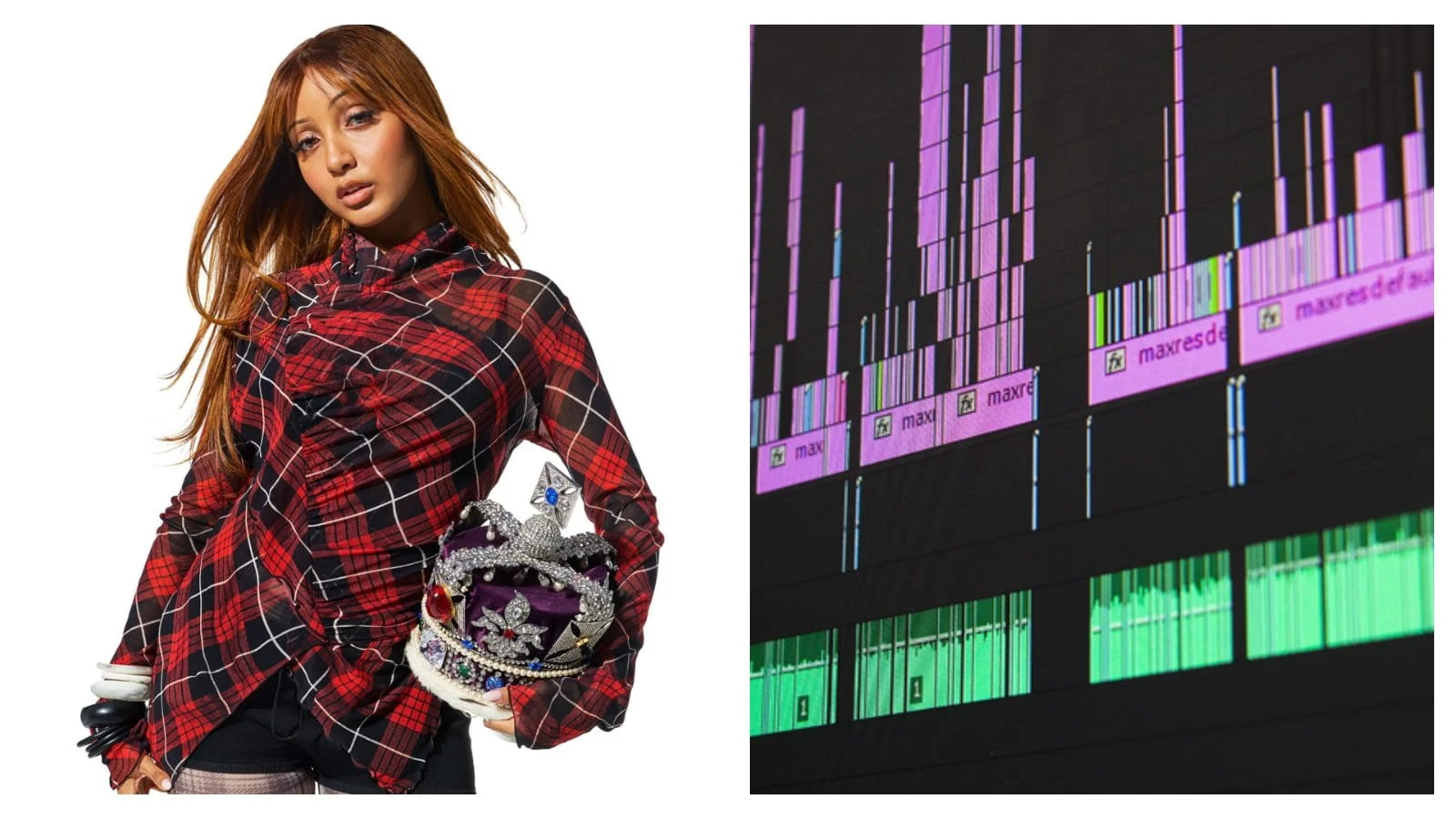
Victoria Beverley Walker, commonly known as PinkPantheress.
PinkPantheress is arguably the most defined example of this phenomenon in modern music, though the actual act of borrowing sounds has been around for quite some time.
She gained traction around 2022 as she began to curate music through GarageBand while at university.
One of her first viral moments was in 2020 when she released “Just a waste”, a song featuring a snippet of Michael Jackson’s “Off the Wall”.
This would see the song removed and archived due to copyright infringements and is now considered one of her unreleased tracks.
Pink would come to be signed to an official records company following her ongoing success in subsequent years.
This made copyright acquisition all the more easy for the budding artist as she began to develop a brand that revolved around relatively short electronic pop songs that reframe the way nostalgic hits from the 90’s and early 2000’s are experienced.
Songs like “Starz in Their Eyes” by Just Jack and “Circles” by Adam F can be heard in some of her most popular tracks, “Attracted to You” and “Break it Off”.
But she is beginning to opt to create her own music that is entirely hers as of late, something made evident in her latest body of work, “Fancy Some More?”.
Pink relayed that whilst she likes sampling, she doesn't view the product of sampled-songs as entirely hers and that there is a level of disconnect between her and her product, but ultimately wants to “reinterpret something I love to different audiences”.
It is clear from her popularity alone, earning over 42 million monthly listeners on spotify, that she is filling a niche that the people long for, that being nostalgia.
From the resurgence of “Y2K” as a fashion statement to the rediscovery of disposable cameras as party-essentials, Britain seems to be undergoing a return to what it knows and loves, albeit almost 3 decades later.
READ MORE: Music news: The Strokes announce ‘Reality Awaits’ album
Why is it so noticeable in music?
Contextually, this was bound to happen for many reasons.
To some extent, the room for innovation is finite, and there is always going to be the risk of someone thinking they have created a tune that someone else on the opposite side of the world hummed thoughtlessly on their way to work.
Intersections of ideas are natural, and we see collaborations where the pairing of two minds curate beloved outcomes from artists who strive towards creating great music.
However, we have also seen vicious legal battles between creators as they insist that their version came first.
It’s harmonic at best and turbulent at worst, and can often come at the expense of independent artists who struggle to have their sounds heard compared to mainstream faces of the music industry.
To some extent, sampling removes the risk of artists competing over who wrote what first but equally restricts access to that same music behind legal barriers.
But also, sampling can act as a bridge between demographics and entire generations; similarly to the sentiment that PinkPatheress holds, old songs and sounds are given a second chance at life and grant new artists metaphorical shoulders to stand on.
The past and present
In many ways, it's a way of bringing the past to the present, where it may have otherwise been left.
There are thousands of pieces of media that have been revitalised by sampling, and I think that there is something beautiful about the cyclical nature of art, where the old inspires the new and, as discussed, can become the new product entirely.
I am not sure if, morally, art was ever supposed to be something that was fought over in legal battles.
Perhaps the highly commercialised state of the music industry is cause for concern, but I take solace in this new perspective artists seem to have, where they can share the sounds that inspired their own journey with their fans, and we make rediscovery a part of the curative process.
READ NEXT: Harry Styles to curate 31st edition of Meltdown Festival
