Great films, greater soundtracks - underrated music from popular films

Music News Blitz’s Zach Heynes discusses three standout scores from already popular films to shine a light on an aspect of the cinematic experience that warrants some more credit.
Music from movies is underrated.
This doesn’t refer to original songs produced specifically for a film, or meticulously placed needle drops in action scenes and credits sequences, but rather the background instrumentation that adds immense impact to the story - even when it’s “unnoticeable”.
Some of the most iconic songs of all time are movie themes.
A great deal of them can be attributed to John Williams, whose repertoire includes ‘Star Wars’, ‘Jurassic Park’, ‘Jaws’, ‘Superman’, ‘Harry Potter’, ‘Indiana Jones’ and many more.
However, it is rare for many other talented musicians to get the attention they deserve for their crucial role in capturing the emotion of a film’s story in ways that words and pictures cannot.
Spider-Man: Into the Spider-Verse (2018)
Music by Daniel Pemberton
With the abundance of superhero films out there, it can be difficult to make a unique one.
Similarly, crafting a hero’s soundtrack without making it generic or forgettable has proven to be quite a challenge.
The score for ‘Into the Spider-Verse’ is as refreshing a take on the iconic hero as the film itself.
Implementing orchestral stings and sweeps over creative hip-hop beats, Pemberton’s score is inventive and intentional.
This creative use of sounds is what primarily gives the score its unique flair.
Besides his blend of standard orchestration and modern sounds, there are certainly few other examples of a composer record-scratching geese honking, for example.
One of the greatest strengths of Pemberton’s work on the film is the intentional application of musical themes, and their significance in defining characters, locations and arcs in the film.
This materialises in many ways, and is even more noticeable in the character-driven 2023 sequel.
One clear case study of this is his approach to composing for villains.
‘The Prowler’ and its chilling, distorted roar have become one of the most harrowing antagonist anthems in recent cinematic years.
The creepy themes for the Spot and Spider-Man 2099 in the sequel live up to its fear factor, too.
The heroes’ themes are not neglected, either, especially that of the protagonist.
Miles has a distinct three-note motif that follows him throughout the film, featuring in more nuanced appearances in earlier tracks like ‘Mi Amor’, or otherwise sounding messier or incomplete as he figures out his powers and identity.
By the film’s end, however, the simple motif has blossomed into a bold anthem, as heard in ‘Spider-Man Loves You’, when Miles’ true self as Spider-Man has become fully realised.
Pemberton’s score tells its own story alongside an already standout film, one that can play alone and evoke similarly powerful emotions.
However, with a masterpiece like ‘Into the Spider-Verse’, who could watch that film in any other way besides in its entirety?
Past Lives (2023)
Music by Christopher Bear & Daniel Rossen
It is only fair for a film as elegantly emotional as ‘Past Lives’ to have a soundtrack that encapsulates peace, longing, and sorrow simultaneously.
Bear and Rossen’s score is refined and calming.
It paints the film’s nuanced mood through muted instrumentation like guitar and piano, while colourfully enhancing it with warpy synths or distorted saxophones.
Its subdued tone has a simple sound, yet is carefully constructed to emphasise the film’s emotive beats.
At times, it can be whimsical, especially through its unique chimes or keys.
But it also embodies an explorative, oceanic feel in tracks like ‘Crossing’, which is appropriate to the film’s emphasis on geographic distances.
At its most emotional, like in ‘We Live Here’, the score strips back the little ornamentation it uses to produce a raw, but still full, sound.
This mirrors the story of Past Lives and the authenticity it so stunningly portrays.
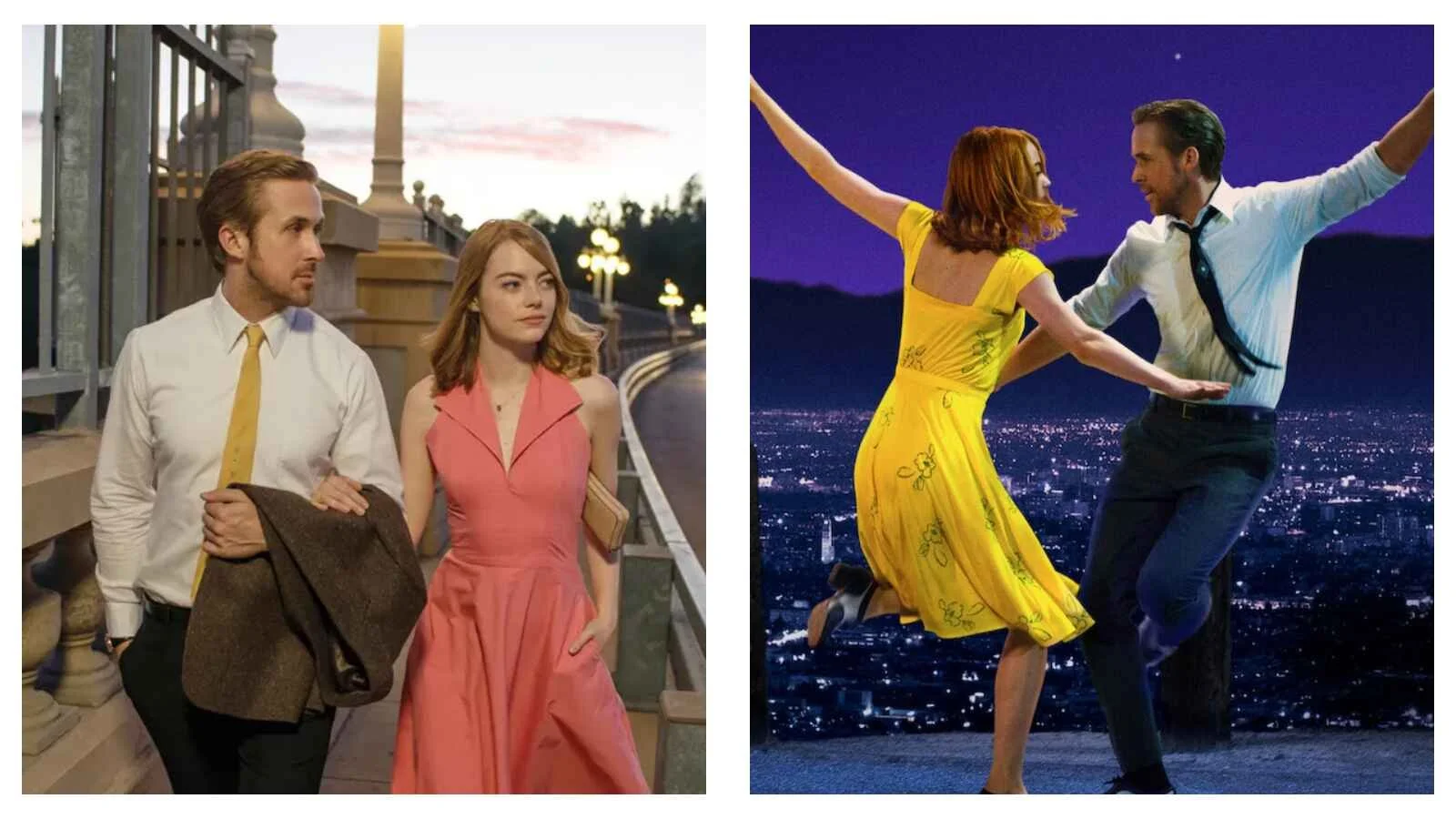
YOU MAY ALSO LIKE: 10 years of La La Land: How a perfect musical film was created
Eternal Sunshine of the Spotless Mind (2004)
Music by Jon Brion
This early 2000s romance drama has grown to become a comfort ‘sad movie’ for many, and a favourite film for many more.
Brion’s score leans on echoey reverbs, reverse effects and ballad-like piano and guitar melodies to emphasise the film’s bittersweet feel.
The combination of sounds and chords equally captures the emptiness of heartbreak and the charm of falling in love, two opposing experiences that characterise the film’s complex sci-fi take on what love is.
The music is spacey and dreamy, but also grounded and raw, and this secondary oxymoron similarly mirrors the main character’s experience as an observer of his own memories throughout the story.
When you relisten to these tracks after watching the film, songs like ‘Phone Call’, ‘Row’, ‘Elephant Parade’ or the main theme can morph into whatever you felt watching the film, and however you remember it.
Brion tells the story of Eternal Sunshine through the score, yet more so by recreating the film’s emotional essence than by providing a linear map through it.
An underrated part of the cinematic experience
While these three scores are personal favourites, there are countless other tracks from film and TV that have extended the magic of the stories themselves long after watching their visual source.
It has been nice to see scores grow more commonly appreciated, albeit through social media trends - examples like ‘Oppenheimer’, ‘Interstellar’, ‘How to Train Your Dragon’, ‘Little Miss Sunshine’ and ‘Fantastic Mr. Fox’ come to mind.
But even masterpieces like Howard Shore’s work in ‘The Lord of the Rings’ films or Joe Hisaishi’s outstanding catalogue of Ghibli music don’t get enough praise.
So, the next time you put on a movie or series, pay attention to the music - you may just stumble upon your next favourite song.
READ NEXT: Music news: Party101 is a global sensation - How #nostalgia has taken over this decade