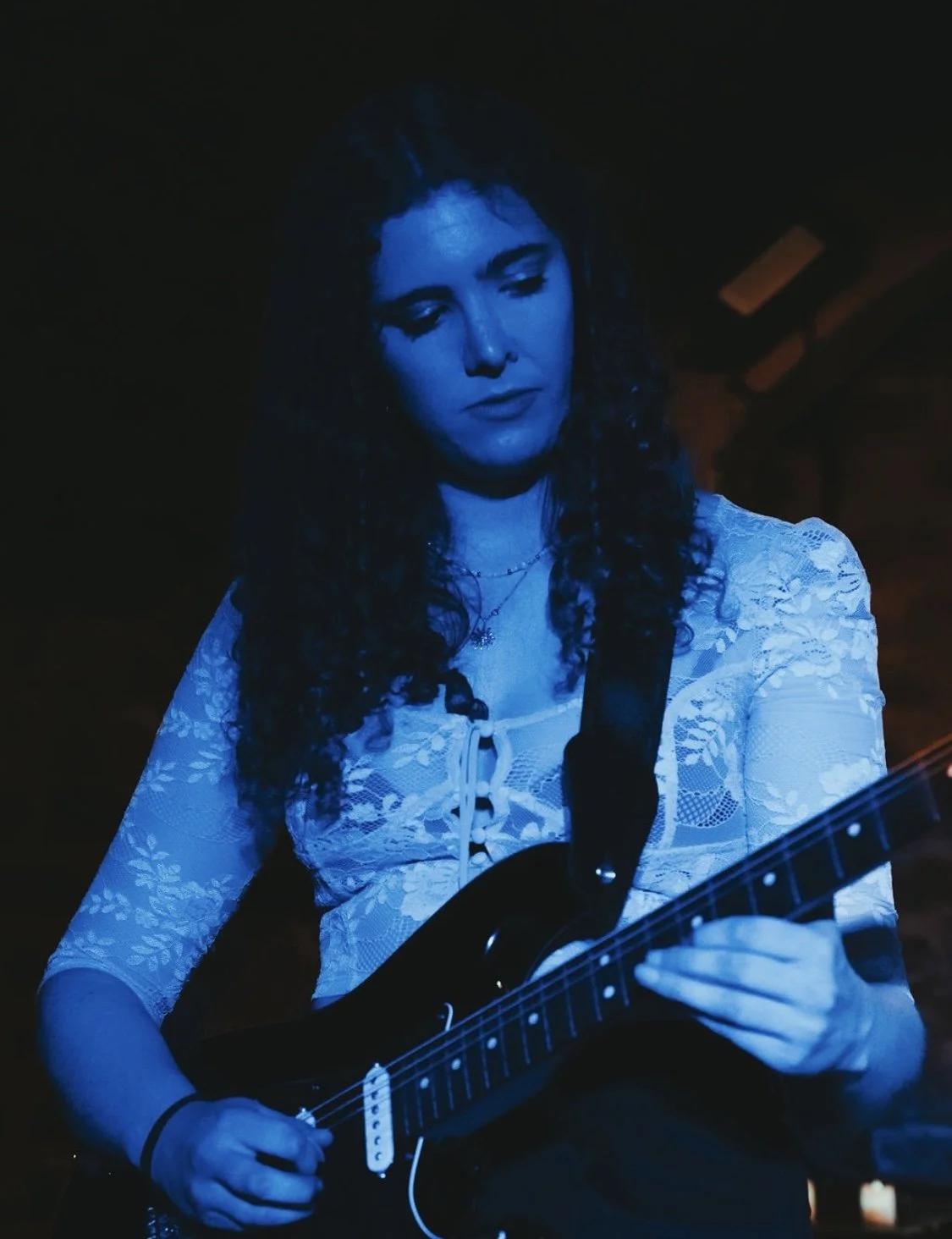
A decade of Wolf Alice - What defines the band who refuse to stand still?

Nearing the end of their latest album tour in December 2025, Wolf Alice close a year of triumph with their biggest 43-date venture yet.
Re-taking centre stage, the four-piece have returned with a bang after three years of silence to remind us why they’re one of the most successful UK bands on the scene.
A band known for their dynamic style, their music and aesthetic have transformed from the grungy Britpop sounds of My Love Is Cool to the polished showgirl era of The Clearing.
Spanning a ten-year period, musical trends, personal experiences and fellow artists have shaped the group immensely.
Here, Music News Blitz’s Katie Slater explores who and what has influenced some of the most impactful tracks of our era.
My Love is Cool and the genre-bending phenomenon
Beginning the journey in 2015 with Wolf Alice’s explosive debut My Love is Cool, this 90s-shoegaze-meets-angsty-rock collection launched the group’s sound into the musical stratosphere.
They emerged in a post-internet, indie-DIY era through open mic nights and self-released tracks - an environment that encouraged interesting sounds over homogenised genre conformity.
With the album born in the earlier days of the internet, there was increasing space for youth-driven bands openly expressing crises of identity and coming-of-age alienation. These frustrations often drive the music over stylistic conventions.
Influences at this time were equally as varied. Soft-verse to crashing-chorus structures of “Your Love’s Whore” and “You’re a Germ” were Pixies-like, while intense vocal deliveries and brooding textures of “Giant Peach” and “Lisbon” garnered Siouxsie and the Banshees comparisons.
Guitar-heavy and riff-driven, the moods switched between gentle introspection and screaming anger through swift changes between reverb-drenched and tight, distorted parts.
Using her voice to tell stories ranging from creepy school yard predators to contemplative musings on God, lead singer Ellie Rowsell shifts between the guttural screams of “Giant Peach” and the softer, breathy edges of “Turn to Dust.”
Finding an audience in all those caught in this age of digital revolution, Wolf Alice discovered a market for their grassroots sound in all its genre-fusing power.

Visions of Life
Arriving two years after their bold debut, sophomore album Visions of a Life welcomed a new influx of inspiration.
Firmly doubling down on their genre-blending style, the alternative grunge sounds of “Yuk Foo” and “Beautifully Unconventional” received comparisons to Nirvana and Hole in their distorted layers.
Continuing with their hazy, shoegaze-inspired textures, tracks such as “Don’t Delete The Kisses” leaned into a dream-pop influence while Rowsell looked to folk storytelling for lyrical inspiration in “After the Zero Hour” and “St. Purple and Green.”
Supporting 2015-2017 trends in mainstream music, Wolf Alice joined the likes of Slowdive and Sunflower Bean in reviving and reworking a distinctly '90s sound.
With the band leaning less into the contemporary-indie side, shoegaze and grunge textures rose to the forefront of their genre blending.
Alongside personal challenges for the band linked to their sudden rise to fame, feelings of anxiety and burnout were also echoed in wider society.
With a post-Brexit country revealing polarisation between generations, a disenfranchised youth were facing an increasingly uncertain future.
While not directly political, tracks echoed many of the sentiments of the time. “Sky Musings,” for example, taps into panicked feelings of losing control, while “Yuk Foo” channels anger towards societal shortcomings through sarcastic humour.
Expansive walls of sound in tracks such as “Heavenward” and “Planet Hunter” express shades of emotions that go beyond words - their anger and uncertainty transformed into sound which occupies a vast, engulfing space.
YOU MAY ALSO LIKE: What makes a popstar ‘real’? Authenticity through CMAT and Chapelle Roan

Blue Weekend
Following this expansive album, 2021 brought the latest addition to the discography, Blue Weekend.
Created during the COVID-19 pandemic, the band were thrown into an entirely new era of creation.
An influx of time meant that the group had the opportunity to slow down the songwriting process and focus on production. Experimenting with string layering, piano and synths, they found new dimensions to their now well-established sound.
Harmonic layering became particularly important to Blue Weekend, with tracks such as “Safe from Heartbreak” pushing into choir-like textures.
The band cite The Roches as a major influence on this new vocal style, using their interweaving three-voice texture as a model for their own tight-knit layering.
Alongside thicker vocal textures, a mixture of live and synthetic strings pushed into an orchestral timbre, adding a cinematic quality.
With an overall glitzier production style, much of Wolf Alice’s foundational angst is dissipated in Rowsell’s dark-humoured lyrics, leaving the instrumentation frequently cleaner.
Though production is clearly considered across the album, not all songs adopt the filmic style.
Stand-out track “Safe From Heartbreak (if you never fall in love),” for example, creates a lulling ballad from voice and guitar alone.
Showcasing the band’s songwriting abilities, the production highlights the coming together of the members' voices in a tasteful display of harmonic leading.
MORE BY KATIE SLATER: Against the algorithm: Could the Last Dinner Party mark the return of human artistry?

The Clearing
Reaching the most recent and perhaps most drastically different album, 2025 brought the release of The Clearing.
Pulling away from many of their characteristic features, Wolf Alice stepped out of their 90s world and into a softer 70s-inspired era.
Like with Blue Weekend, the production style pushes further into polished spheres - this time, however, the band’s usual edges are smoothed into a poppier shape.
Gone are the days of reverb-drenched soundscapes or squealing guitars. The Clearing marks a firm move to key-driven music with more traditional song structures and melody-focused writing.
Where guitar is present, the tones are clean and warm. Songs such as “Leaning Against The Wall” and “Midnight Song” are even acoustic-driven in both sound and technique.
Gentle finger-picking styles provide legato melodies almost unrecognisable from the earlier album’s punchy fills.
Much of the songwriting was driven by a desire from Rowsell to explore the instrumental capabilities of her voice.
Songs such as “Bloom Baby Bloom” demonstrate this in particular as she explores range and timbre much more forceful and open-throated than her usual breathy delivery.
A marked switch in style and influence, The Clearing feels like the creation of a band who have pushed their earlier sounds to their natural edges.
Speaking of burnout from relentless touring, the loss of youthful angst that fades in your early 30s, and the stabilising of relationships, the project needed a new direction to stay reflective of the individuals.
Conclusion
A band impressive in both reign and influence, Wolf Alice have proven themselves as musicians continually open to growth.
Pioneers of the genre-blending age, the same four people who captured the hearts of brooding teenagers have morphed into a cleaner, gentler reflection of modern life - the ultimate proof of their dynamic skill.
Across their four albums, the band’s shifts in sound reflect more than musical experimentation, but a world changing around them.