From politics to the decks: Why the Green Party are throwing a rave
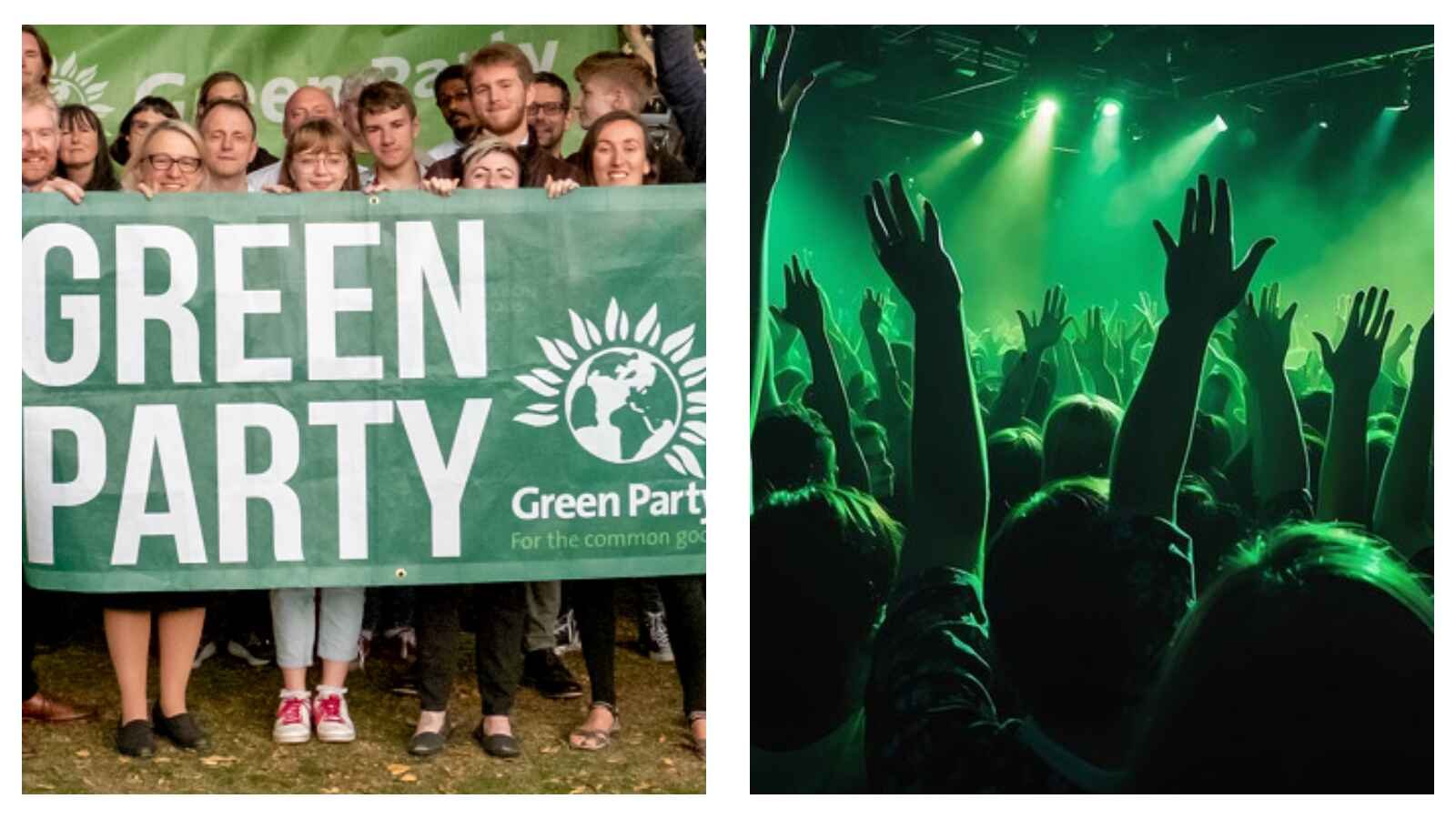
Green Space, the creative collective partnered with the Green Party, are holding a fundraiser rave in Leeds at one of the biggest underground grassroot venues in the country.
Is this the future for campaigning for votes – or is it just a gimmick?
Music News Blitz writer Maisie Sharp-Fehr shares her thoughts.
Event details
The Green Party ‘Party’ is happening on Sunday, April 19 in Leeds’s very own grassroot venue, Beaver works; the day rave will start at 3pm and finish at midnight.
With the next scheduled election in Leeds to be held on May 7 and the deadline for registering to vote quickly approaching (April 20), students are being reminded that they can register to vote both at home and University.
The multi-genre underground event will feature Jungle, House and Drum & Bass music across multiple stages.
The leader of the Green Party, Zack Polanski, is headlining, and will be joined by an all-star line-up featuring other well known DJs including Badger (UK) and This is INJA.
Party politics
‘Green Space’ runs through the Green Party’s ideologies, placing physical and social justices at the heart of their values.
Whilst it reflects environmental politics, it also highlights the significant challenge that political parties face: connecting with younger voters in a way that actually feels relevant.
For many young people, voting can often feel formal therefore making it distant, highlighting the barriers faced when trying to increase youth electoral participation.
Traditional campaigning methods such as leaflets and speeches are not cutting through to younger generations.
Therefore events like these aim to change what campaigning looks like - by connecting with younger audiences in real-world spaces, making political messages feel less like a lecture and more shared and accessible, shifting the movement of politics.
The Green Space blending youth culture with politics is not something new.
Raving culture is deep rooted with activism with it being used as an outlet for counterculture, a movement for unity outside of traditional systems.
From big festivals to underground basements, raves have often existed as a space for community with less societal judgement.
This shows a political rave as less of a modern making but rather a cultural movement to help form expression and, at times, protest.
This rave in Leeds shows how political activism doesn't always have to be formal or institutionalised - and that political engagement can exist in different more ordinary places where people already express themselves.
YOU MAY ALSO LIKE: Music opinion: Sabrina Carpenter, Justin Bieber at Coachella 2026 highlight different expectations in pop headlining
Reactions
This event has sparked mixed reactions, with many supporting the way that the Green Party are boldly taking initiative with younger generations, with ‘Young Greens’ being the largest student and youth wing of any UK political party, with more than 40,000 members.
For students especially, initiatives like this make political conversations more compelling as it feels less like a political rally and more like a standard night out, aligning with nightlife culture but with a political twist.
Critics have suggested that formatting politics as a source of entertainment raises the question on whether their approach is more symbolic than substantive.
While the event might attract engagement, will it actually contribute to long-term voting goals and does it actually inform voters?
Ultimately, it supports the idea of adapting to youth culture in campaigning, but does it really change voting participation or simply repackage it?
Culture
One of the most notable aspects of the Green Party 'Party’ is its focus on accessibility, in both price and purpose.
With tickets starting at £11, the Green Party have deliberately tried to reflect what a student usually pays for a ticket, showing how they have tried to remove the financial barriers to political engagement to ensure the event is open to as many people as possible.
In addition to this, the line-up also features local DJs such as Amelia Leigh and Jemeela, embedding the city’s own talent in the creative scene rather than just relying on commercial acts.
Local involvement at the events as well as its affordability helps make the atmosphere feel inclusive and community-led rather than corporate.
The narrative of the Green Space suggests that music is more than just a source of entertainment but rather a shared language for community.
By bringing campaigning to the dancefloor, politics can feel less distant but more current and real.
The question now is, will this redefine how parties campaign to younger audiences?
If so, is it just a matter of time before other parties follow the same beat?
But most importantly, is Zack Polanski any good ‘on the mic’?
READ NEXT: Harry Styles to curate 31st edition of Meltdown Festival