Music opinion: Sabrina Carpenter, Justin Bieber at Coachella 2026 highlight different expectations in pop headlining
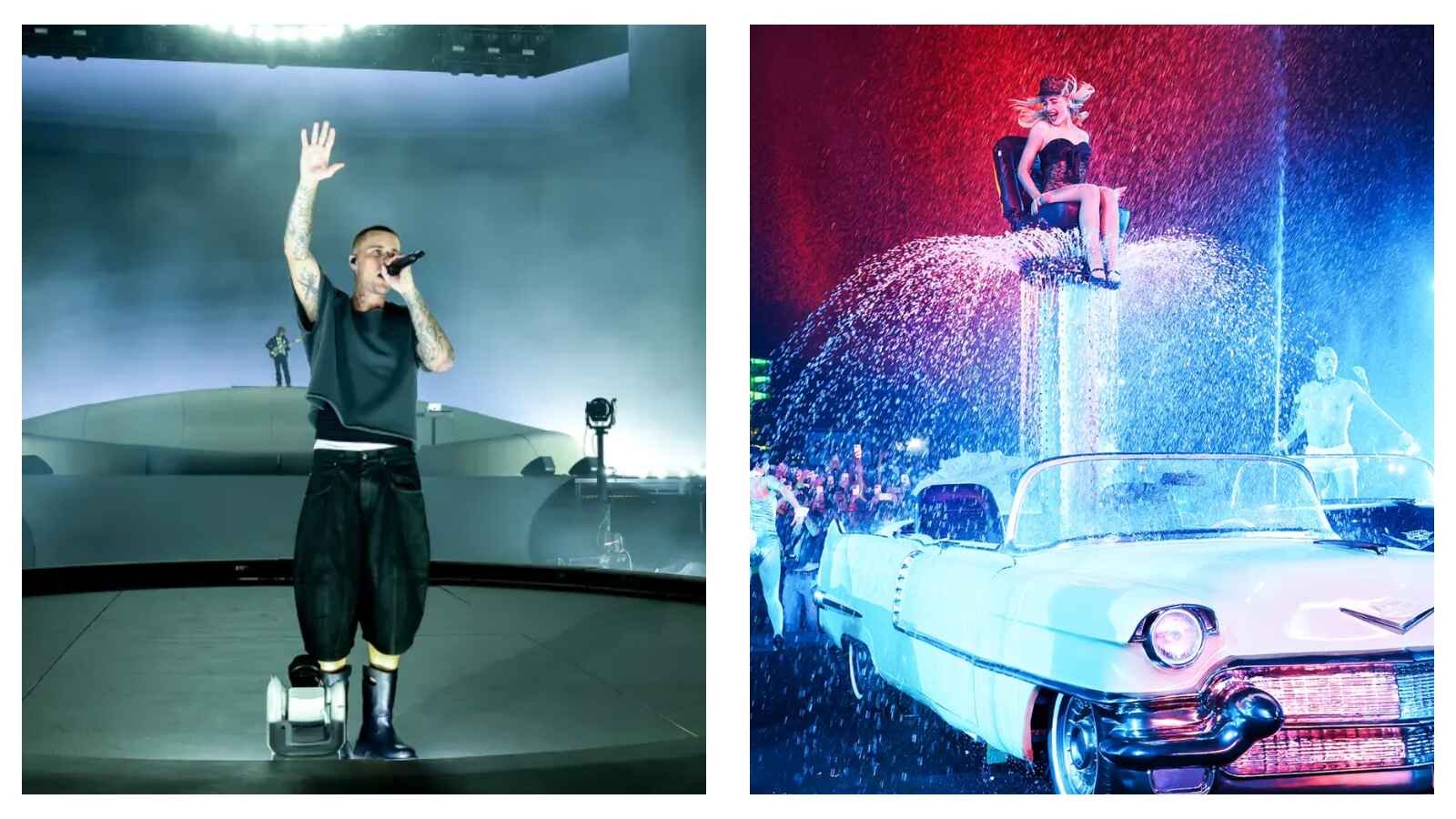
As Sabrina Carpenter and Justin Bieber took the Coachella 2026 stage as headliners, the stark difference in expectations surrounding their performances became impossible to ignore.
Music News Blitz writer Anna Ferraz unpacks this contrast.
The unspoken double standard
Coachella has always been a cultural thermometer where performance, spectacle and legacy collide.
But this year, it felt like we were watching two entirely different rulebooks in action.
One artist was expected to prove herself. The other? To simply show up.
And maybe that’s the problem.
Enter: Sabrinawood
Carpenter didn’t just sing, she built and performed in an unforgettable musical world.
Her Coachella set felt like stepping into a glossy, chaotic, hyper-feminine cinematic universe. It was theatrical, detailed and completely immersive.
Costume changes happened at a speed that felt almost unreal, each look carefully chosen to match a new scene on stage.
The set design transformed constantly, turning the desert into something closer to a Broadway production than a festival slot.
It wasn’t just about the music; it was about storytelling. About control, intention and storytelling.
YOU MAY ALSO LIKE: Music opinion: Elitism and wealth at Coachella
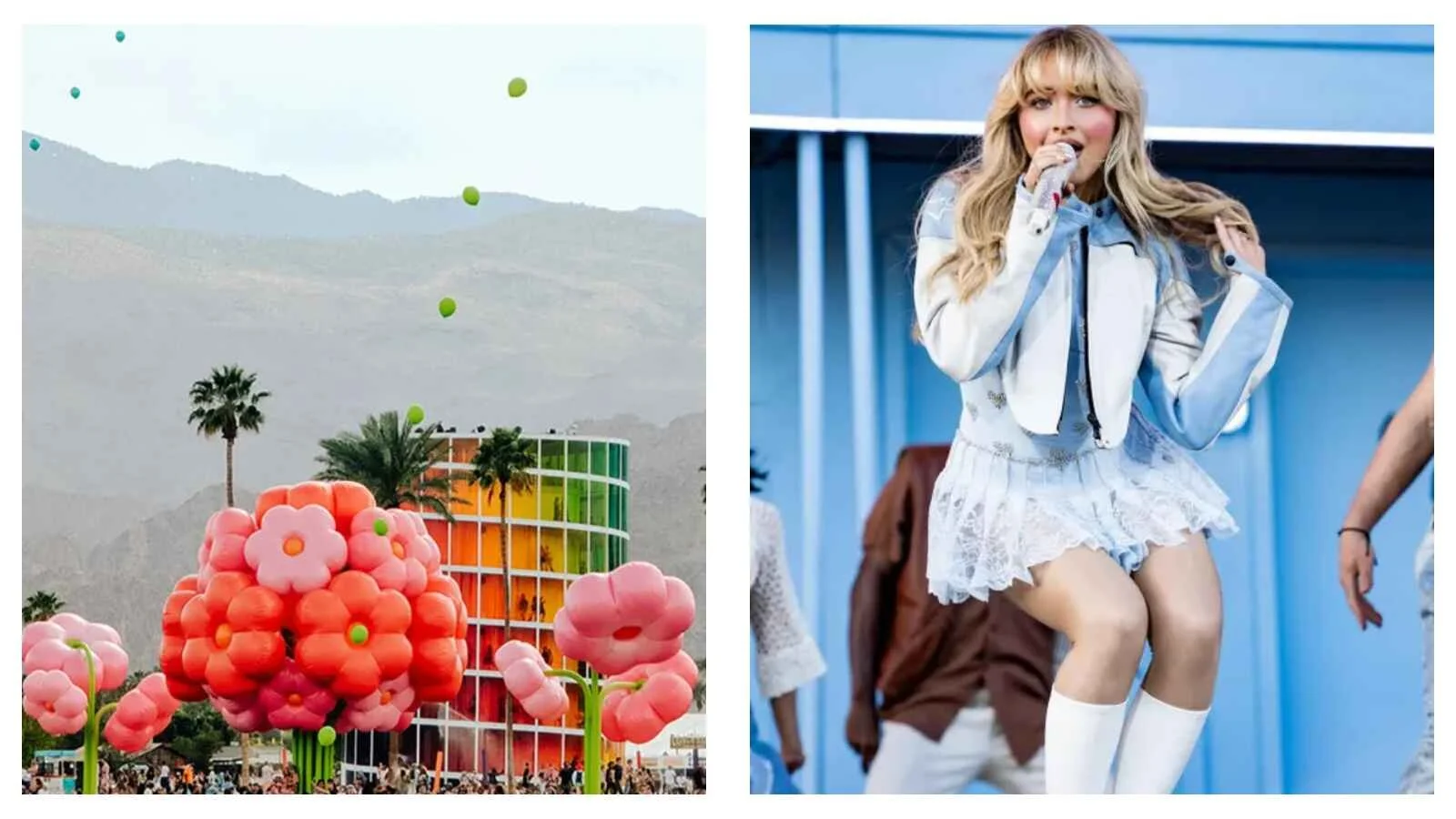
Bieberchella: Intimate or underwhelming?
Then came Bieber.
“Bieberchella” was expected to be a long-awaited return – something nostalgic and meaningful.
And in some ways, it was.
His performance leaned into intimacy, reflecting on his career and even including moments where he watched old YouTube clips of himself.
It was self-aware, almost vulnerable and for many fans, deeply personal.
But not everyone saw it that way.
Zara Larsson’s comment – “it’s giving let’s smoke and watch YouTube” – summed up what many people were thinking but didn’t want to say out loud.
Compared to Sabrina’s maximalist spectacle, Justin’s set felt stripped back – maybe too stripped back for a stage like Coachella.
Some loved the honesty of it. Others found it underwhelming, especially considering how hyped “Bieberchella” had been.
And I’ll be honest – as someone who grew up on Justin’s music, I wanted more.
The harsh reality for female pop stars
Female pop stars don’t just get to be good, they have to be unforgettable. They have to be visually perfect, conceptually strong and endlessly entertaining.
Because the bar for female pop stars has historically been set differently and often higher than for their male counterparts.
Women in pop aren’t just judged on their music.
They’re evaluated as full visual and cultural packages: how they look, what they wear, how they move, what message they’re sending, and how consistently they can reinvent themselves.
A “good” performance isn’t always enough, because the expectation is that they deliver something iconic, dissectible and replayable.
There’s also less room for error.
Where male artists are often allowed to lean into simplicity or authenticity without heavy critique, female artists are more likely to be labelled “boring” or “underwhelming” if they don’t push boundaries visually or conceptually.
So being “unforgettable” becomes the baseline, not the bonus.
Sabrina didn’t just meet that expectation, she pushed it further. She raised the standard for what a Coachella headline performance could look like.
Is Bieber “allowed” to do less?
This is where things get complicated.
Bieber has already done the world tours, choreography and reinventions.
He’s put in the work. Is it fair to expect him to still go all out?
Or is this just where he is now in his career trajectory, where he has creative control of choosing intimacy over spectacle?
But here’s the uncomfortable truth: if Sabrina had delivered that same low-key set, she would’ve been dragged.
It wouldn’t have been called “intimate”, it would’ve been called boring.
That’s the double standard.
Male artists, especially those with established legacies, are often allowed to scale things back and be seen as authentic.
Meanwhile, female artists are expected to keep scaling up to keep proving themselves over and over again.
So when we ask whether Justin’s performance was lazy or earned, we’re really asking something bigger: who gets to decide when an artist has done enough?
Where Coachella goes from here
What Coachella 2026 made clear is that the bar isn’t just high, it’s more uneven.
Carpenter showed us the future: immersive, theatrical and unapologetically ambitious.
Bieber reminded us that sometimes less can be more, but also that “less” lands differently depending on who you are.
Maybe both performances were honest. Maybe both were valid.
But only one felt like it had something to prove.
And only one was expected to.
READ NEXT: The depiction of female artists in the media