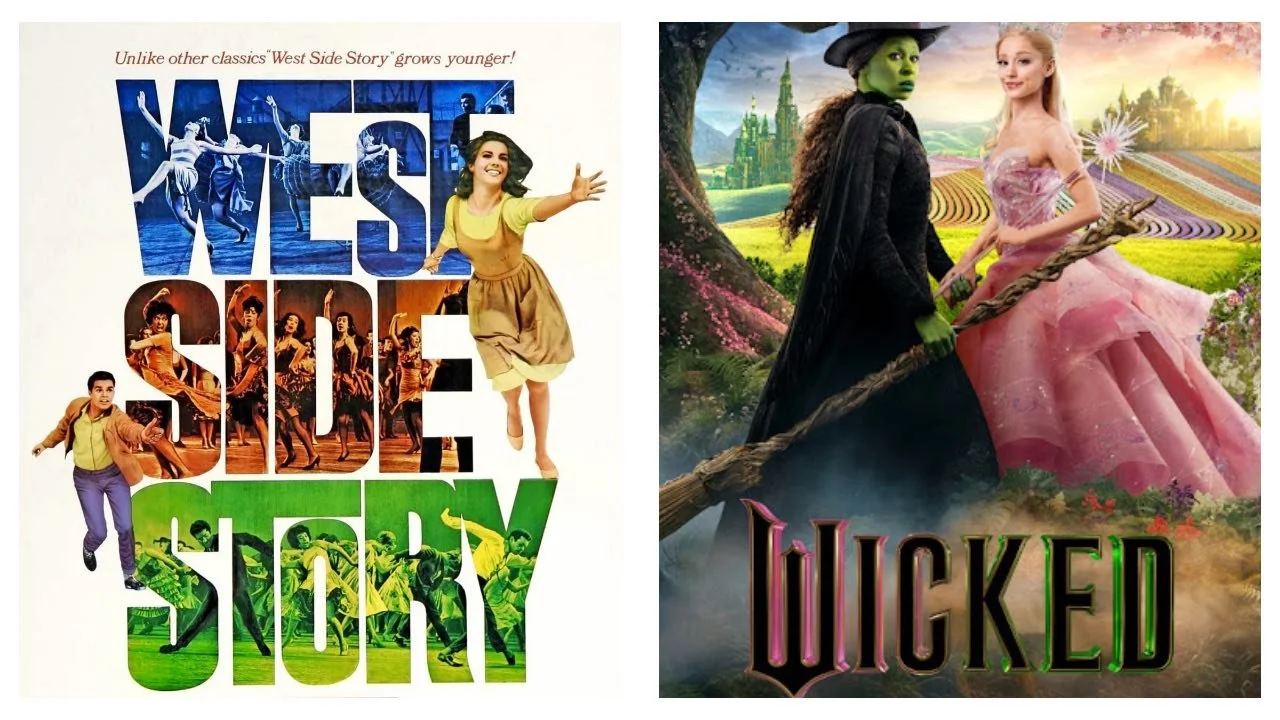
Popular music has shifted drastically over the years, with each decade having its own unique style and symbolic reflection of the era, but musicals have stood the test of time.
As they originally focused on dance and comedy with standalone performances, the genre has gradually evolved to incorporate more complex plots and characters, which are evident in productions today.
The thrill of a live performance, which includes shared audience reactions, a blend of genres like comedy, drama, and romance, and striking costumes, is still something contemporary audiences are drawn to, writes Music News Blitz’s Emma Corrigan.
From the stage to the screen
With live theatre remaining as popular as ever, musicals have naturally branched into the film industry, therefore allowing the performances to be the more accessible and affordable alternative for audiences to engage with the genre.
Not only are film and stage musicals closely connected, but they also share a focus on emotion and storytelling by creating immersive experiences for audiences.
Through the use of cinematography and editing, film has expanded the scale and impact of musical theatre as it brings the spectacle of the stage to the screen while preserving its emotional depth.
More than entertainment: how musicals have been used to depict social issues
Musical theatre has been a source of escapism for audiences by using entertainment to portray occasionally difficult topics.
Throughout the years this theme has been integrated into film adaptations, and working class realities are reflected alongside light hearted humour and extravagant musical numbers.
West Side Story (1957)
Set in 1950’s America, the story follows Tony and Maria, whose love is torn by their families' rival gangs.
With stylised fights and expressive performances, the story actually underscores deeper social issues and inequality, highlighting racism, immigration and violence that were prevalent during that particular era.
The Sound of Music (1959)
Although it is known for its uplifting music and family dynamic, The Sound of Music also explores serious social issues surrounding authoritarianism, freedom and political oppression.
As it still remains a beloved musical, the context symbolises the historical tensions surrounding war and dealing with it as ‘the norm’.
Oliver! (1960)
Oliver!, originally made in 1960 before the film adaptation was released in 1968, reflects the stark contrast between the titular orphan’s harsh upbringing and wealthier characters.
As well as this, the story reflects themes of neglect and child exploitation.
Oliver’s journey creates a compelling narrative and memorable songs that keep the audience invested.
Billy Elliot (2000)
Unlike the first three musicals, which were stage productions first and later adapted for film, Billy Elliot was released in 2000 before premiering as Billy Elliott The Musical at London’s West End in 2005.
With the story following the miner’s strike in the North East of England during the 1980’s, Billy Elliott explores themes of class inequality, gender expectations, utilising these themes into powerful musical storytelling.
The Greatest Showman (2017)
The Greatest Showman is one of the most recent and successful musical dramas.
It follows the journey of P.T Barnum and features dazzling choreography and vibrant outfits to maintain a traditional theatre aesthetic.
Alongside this, the film uses uplifting and emotional songs to develop individual characters and advance the plot.
However, even though the film was set during the 1800’s, exploring themes such as discrimination, self worth, class and racism is still relevant to modern day viewers, and in doing so it encourages audiences to embrace individuality and challenge prejudice.
READ MORE: Music analysis: The death of the music video - or its reinvention?
In cinema or on stage, musicals keep their core
While it's increasingly common for musicals to be developed into films, the foundations of their methods continue to use the genre’s core defining elements, demonstrating how musicals remain true to their roots.
The popularity of this trend shows how musical theatre has evolved with modern society, continuing to address social issues whilst preserving the spectacle that has defined productions for generations.
What's on stage at the minute (Up North)?
In Leeds, The Grand Theatre is currently showing ‘Legally Blonde’, with Amber Woods as Elle Woods. The production is followed by ‘Mamma Mia!’, ‘High Society’ and ‘Heathers’.
Close by, Bradford’s Alhambra Theatre is set to show ‘The Jersey Boys’, ‘The Greatest Showman’ and ‘Priscilla The Musical’.
With such productions and many more lined up for the rest of the year, there is no shortage of opportunity to take a trip to the theatre.
READ NEXT:‘Music, Fashion, Film’ - What we know about Charli xcx’s upcoming album