

Mitski’s Nothing’s About to Happen to Me: The female and feline intersection
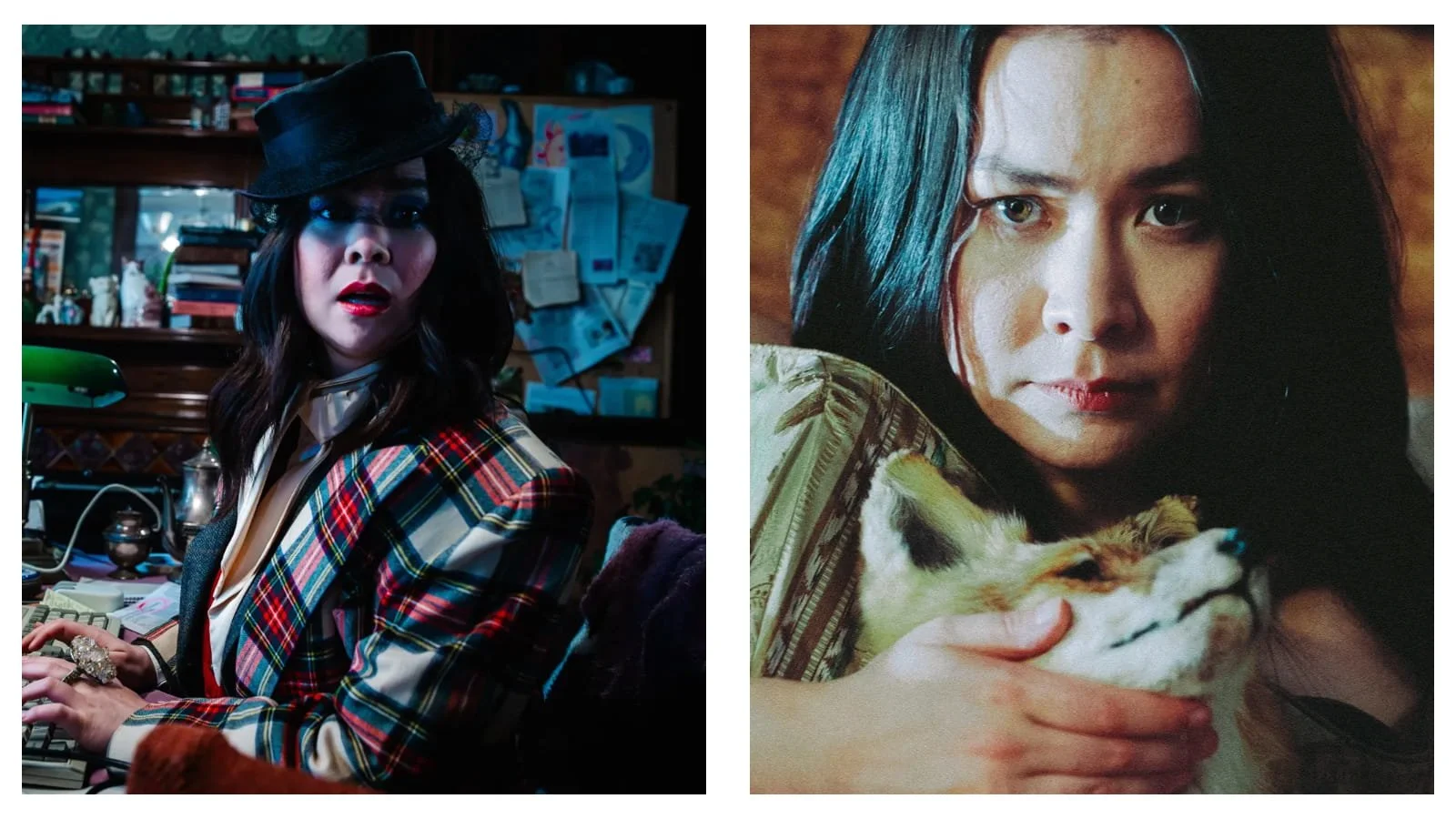
Every few years, Mitski returns to my Spotify feed with a new body of work for me to unpack and internalise as she discusses, in sometimes horrifically accurate levels of detail, feelings of melancholy and sorrow in a way few other artists are able to replicate.
2018’s “Be the Cowboy” was an uncomfortable assessment of desire and the want to be desired, a testament to the tempestuous feelings that love can bring and the negative effects it can have on one’s sense of self, writes Music News Blitz’s Isaac James.
2023’s “The Land is Inhospitable and So Are We” was a sorrowful commentary on love as a force for transformation and the desolation we often tolerate, simply attributing the horrors of modern life to industrialisation and population expanse.
So, what is “Nothing’s About to Happen To Me” a testament to?
Cats. The human perception of cats, and how their suffering can mirror our own.
A lone, white cat
It is no secret that Mitski loves cats, having adopted two during lockdown and being a self-proclaimed “Cat Mom” that does not shy away from expressing her adoration for feline companions.
But the fondness she feels for them has been a deep inspiration for this latest album in a way I find interesting.
In an interview Mitski stated that: “[Cats] love you how they love you and they do what they want.
“And I think often cats are demonised for that in a similar way that I think a lot of women maybe are, misunderstood for that quality, just because we might not be exactly what women are supposed to be in patriarchy”
The album’s cover, a painting by the artist Marc Burckhardt, displays a white cat with heterochromia, sitting contentedly, its head facing the viewer and peacefully unaware of the vicious ginger cat launching an assault upon it.
This, of course, recontextualises the album’s name of “Nothing’s About to Happen To Me” because something absolutely is about to happen to the cat.
She remains ignorant of the harm that awaits her, sitting idly as she unknowingly turns her gaze away from the harm that shall befall her.
Something bad will happen, something harmful and painful, thus the album aims to capture the limbo one experiences as they transition between a state of peace and a period of unknowable danger.
READ MORE: Queer history - exploring how underground gay clubs shaped the sound of modern music
The choice to feature a white cat on the cover was also deeply intentional and metaphoric and a very tasteful way to encapsulate the feeling of vulnerability with a single creature’s image.
White cats are famously ostracised from litters; their unique fur coating that humans deem elegant and beautiful being a hamartia that alienates them from their own kin.
The high visibility dwindles their camouflaging capabilities, effectively rendering them unable to be a predator and likely to be prey.
They lack lethality and stealth, and their luminous coat indicates that they draw attention to a litter, a four-legged beacon to some effect.
White cats also commonly suffer from higher rates of deafness than other members of their species, especially those with blue eyes like the one featured on the album’s cover.
They are liabilities, unhearing and unknowing; the orange cat that pounces upon it weaponises its hindrances, biological flaws that cannot be undone.
The white cat was born a victim, born into an inhospitable life and at the mercy of its peers, frighteningly similar to the accommodating world that patriarchy breeds for women.
Cats
The song “Cats” unpacks the struggle of codependency, using cats to explore the way in which they are relied upon as companions in the wake of heartbreak, their owners clinging onto the sense of belonging and love that can no longer be offered from their departed lovers.
Cats represent stability in the song, an unwavering sense of security and a love that does not wax or wane, they stay within the confines of one’s house, yet the song also acknowledges their longing for distance.
Cats are known for their rigid boundaries.
The more one seeks them out and bombards them with affection, the least inclined the creatures shall be to reciprocate, they love in small doses and defy love in overwhelming capacities.
I think that “Cats” is a very fascinating way of explaining such a complicated yearning to have a different relationship than what already exists, to have a relationship that is oversaturated with time and closeness, something that Mitski ultimately acknowledges comes at the cost of the cat’s well-being.
She must “Stop trying, to be someone you’d like” as she offers distance and comfortability as a token of fondness, relenting “‘Cause I still love you, so I won't leave you. Guess it’s up to you, if you choose to go in the meantime”, blurring the distinction between a lover whose presence is fleeting, and a cat that flees from an owner’s lap.
The final verse in the song disregards the unreliable lover entirely, as Mitski finds comfort in the isolated nature of her cats.
She now sits alone, thinking of her cats and her love for them, and acknowledges that there is a greater level of love needed to let them go and pursue their own desires.
They leave the house, striding into the shroud of night, as Mitski sits alone, happier than she was as she waited for her lover, perhaps because she knows that her cats will return.
She lets go of her cats and the love that was not reciprocated. The album encapsulates an effort to understand behaviours that all too often demonise a creature, sometimes women, sometimes cats.
“Maybe tomorrow night, the cats will be nowhere in sight, but I’ll be glad to know, they're out following their heart’s delight”.
READ NEXT: Music news: A new era for Blossoms with new single ‘Joke About Divorce’
