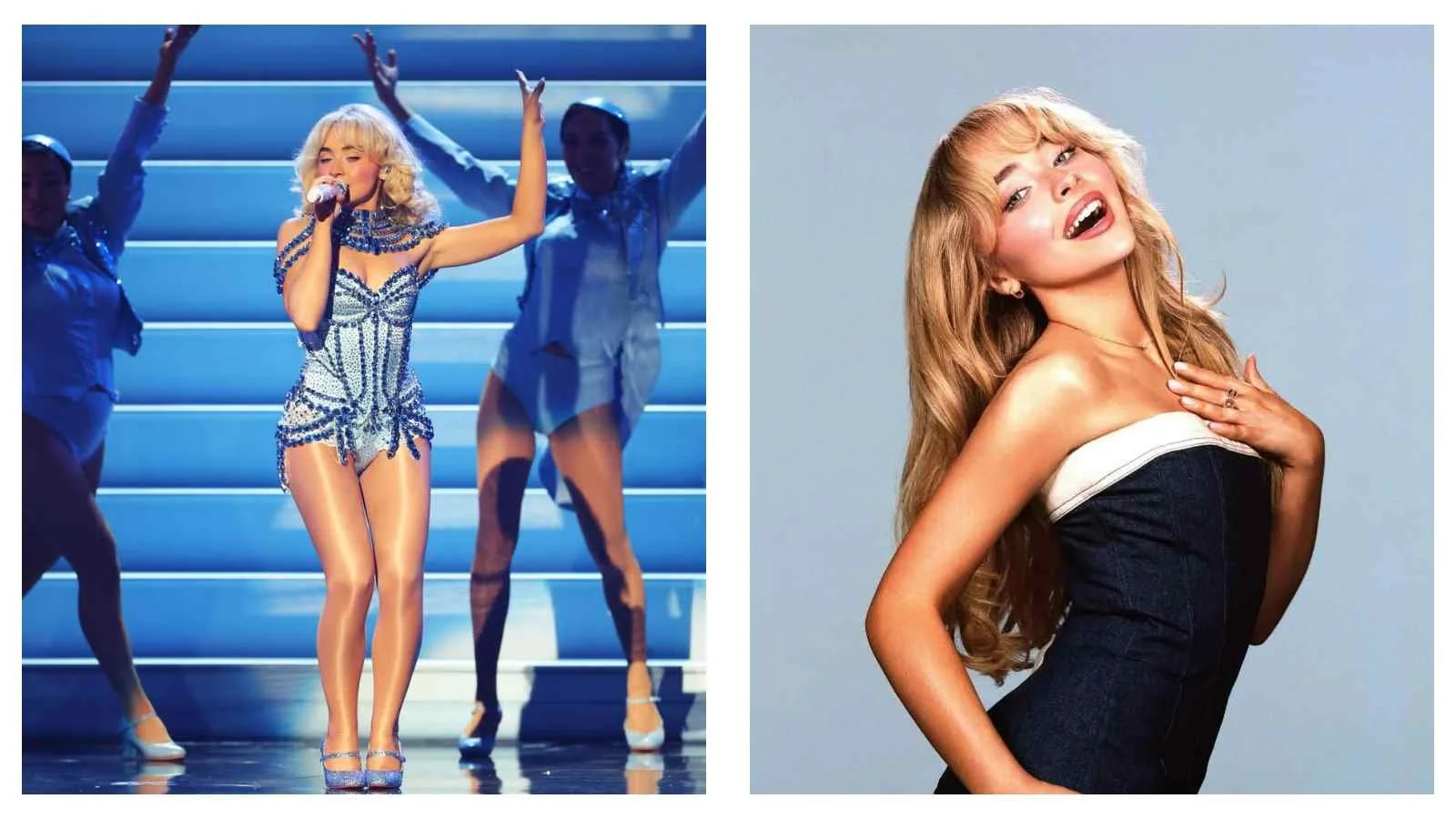
Sabrina Carpenter has quickly become a name few would fail to recognise.
Known for her playful innuendos and witty humour, her songs have gripped the Western world since the 2024 release of “Espresso”.
However, provocative language and chosen aesthetics have resulted in strong public opinion on the feminist position of the star.
With our celebrities continuing to shape wider society, the debate is an undeniably important one.
Yet while much of that debate centres on whether Carpenter's brand of femininity is empowering or regressive, her tendency to provoke political discussion without substantially contributing to it leaves the conversation frustratingly unresolved, writes Music News Blitz’s Katie Slater.
Sex sells
Though historically much more taboo, women’s sexuality is still a complex topic in contemporary society.
While a flash of the ankle may now be deemed just about acceptable, there is often a fine line to tread when expressing desire as a member of the fairer sex.
Prudishness is out of date but push your luck and you’ll still find yourself labelled a “whore” or something similarly delicate.
Perhaps inseparable from her fame, Sabrina’s most popular tracks are laced with innuendos. From the playful insistence of “I just want you to come inside” in “House Tour” to the internet-famous sex-position references in “Juno”, subtlety is not something Sabrina Carpenter is known for.
With this hypersexuality resulting in many allegations of the pop princess deliberately playing into male fantasy as a marketing technique, this has caused discomfort for some.
After a continued battle to be seen as more than the sexual objects women are historically reduced to, there is understandable concern in leaning into these desires for money.
Strong voices online have accused the singer of setting back women’s rights by years.
Blonde, beautiful and flirty - she spotlights a male desire that feels somewhat outdated.
Not quite the girl next door
While the shoe fits to a certain extent, there is a limit to how much Sabrina can be seen as playing into the ploys of the male gaze.
With male fantasy often having an unsettling element of conquest framing it, the sexual liberation of the popstar is starkly at odds with this.
More than lightly suggestive, much of Sabrina’s brand is built on a sex drive more commonly associated with men in modern media.
The songwriter frequently leaves ideas of romance out of the picture, even labelling herself as objectifying the subjects of her pursuits.
Subverting the accepted ideas of female sexuality, lyrically, the singer often presents herself far from the “desirable” passive and submissive counterpart, but a woman both active and adventurous in her desires.
Zipped lips
Unlike other high-profile artists of our time, such as Olivia Rodrigo and Billie Eilish, who are incredibly outspoken in their opinions, Carpenter is much more wishy-washy in her feminist stance.
Other than a comment made to her fans in which she acknowledged the hardship of being in a woman under Trump’s rule, Sabrina has kept her cards rather close to her chest.
While this article may have made the case for her hyper-sexual, almost camp delivery of femininity as a stance in its own right, does Sabrina’s lack of statement on the matter leave a pressing question: can we afford to spotlight someone so lacking in political messaging?
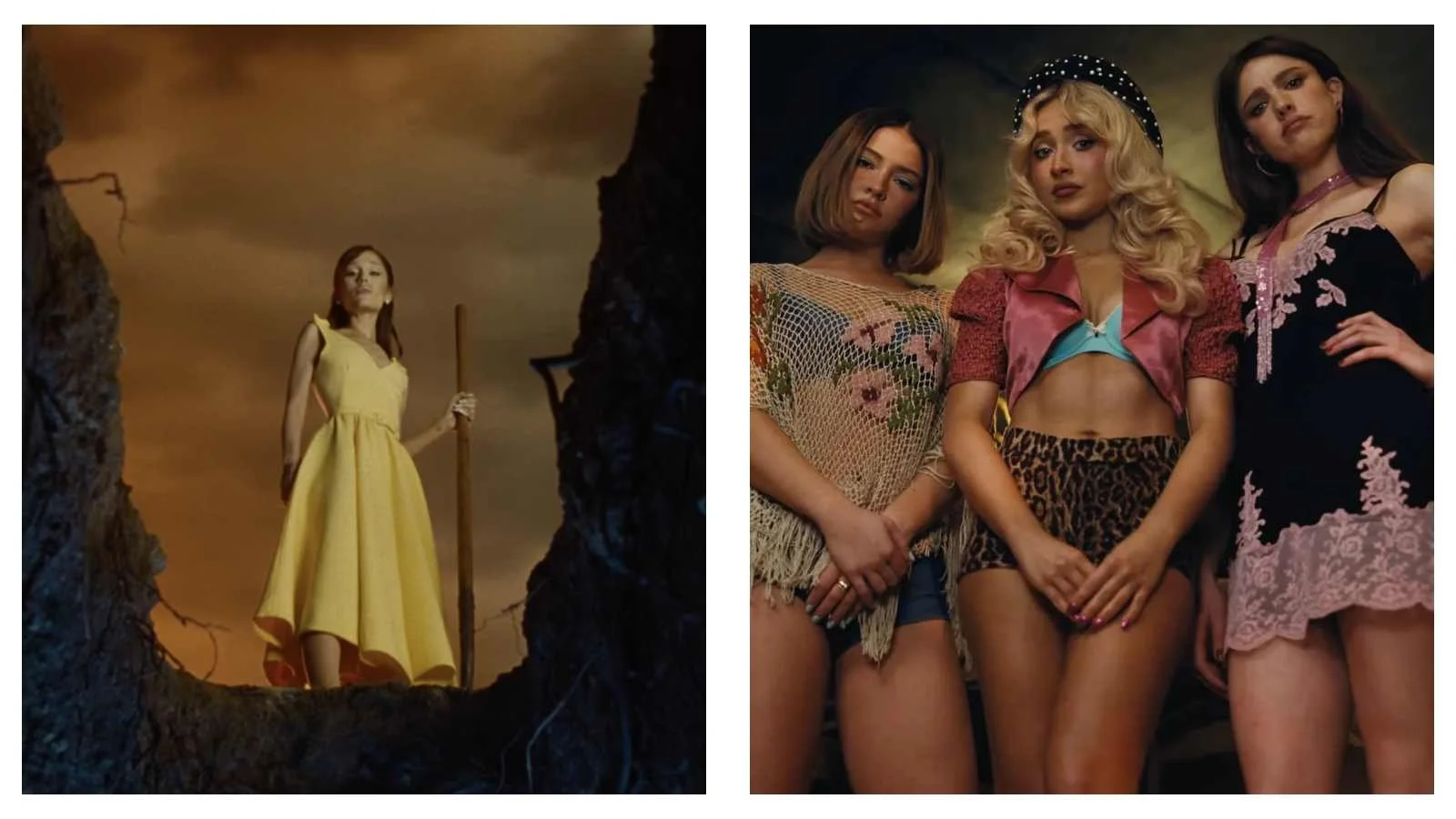
Continually provocative in her branding, with this reaching a new height in her choice of album art and title for “Man’s Best Friend”, the singer prefers to leave her statements up to individual interpretation.
This is perhaps where my discomfort lies.
Album covers depicting Sabrina in a degrading position may not be inherently anti-feminist alone. Yet, without a clear statement on sexual liberation, power dynamics and even more imperative- discussion on consent, I worry such moves are more attention-grabbing than social commentary.
Optimistically hoping this lack of a substantial statement is perhaps Carpenter demonstrating that women can create political discourse by simply existing as an uncensored voice, the cynic in me is unsure.
Equally as likely as a poignantly anti-patriarchal silence is the victory of capitalism,
Laced with just enough irritation at men for the young female consumers, without contributing to any external commentary, her music stays easy enough to swallow by all.
Music laced with enough irritation at the shortcomings of men for the young female consumer, the lack of external commentary keeps her music easy enough to swallow by those not subscribed to an anti-patriarchy agenda.
YOU MAY LIKE: Music analysis: The death of the music video - or its reinvention?
Am I the problem?
While I perhaps remain slightly disappointed by Carpenters' silence on the exact political issues her music brings into question, I remain acutely aware of the irony in analysing a woman for her anti-patriarchal contributions.
Although male musicians are allowed to simply exist as artists, their female counterparts are continually picked apart and analysed for their commitment to the feminist cause.
Male artists very rarely face allegations of being poor role models, and even less frequently get ranked on their patriarchy dismantling skillset.
The discourse surrounding any female artist, therefore, creates a tension between their responsibility in the spotlight and their rights to just exist without an inherent politicisation.
This tension is ultimately what causes the biggest challenge in trying to resolve the debate surrounding Sabrina.
No longer simply about the singer herself, but a question of what we expect from women who occupy spaces of cultural influence.
In conclusion?
A debate with layer upon layer, it’s incredibly hard to make a definite statement of whether Sabrina Carpenter is a hero or a hinderer of the contemporary feminist movements.
While I sincerely hope that one day women will be simply allowed to exist without inherent politicisation, it feels somewhat disappointing to allow a rather ambiguous stance to gain such fame in our current climate.
For me, the discomfort is particularly prevalent when Sabrina chooses a deliberately inflammatory lane with little dialogue to follow.
Her sexuality alone is certainly not the issue, but rather the combination of provocation and silence that leaves space for unease.
With a conclusion on the feminist elements of the songwriter, perhaps as annoyingly unclear as her own political convictions, Carpenter embodies all sides of the debate with very little of her own commentary to create a conclusion in either direction.
READ NEXT: Music analysis: Has social media created a new type of pop star?