

Musicals: Review and FAQ of The Greatest Showman at the Bristol Hippodrome
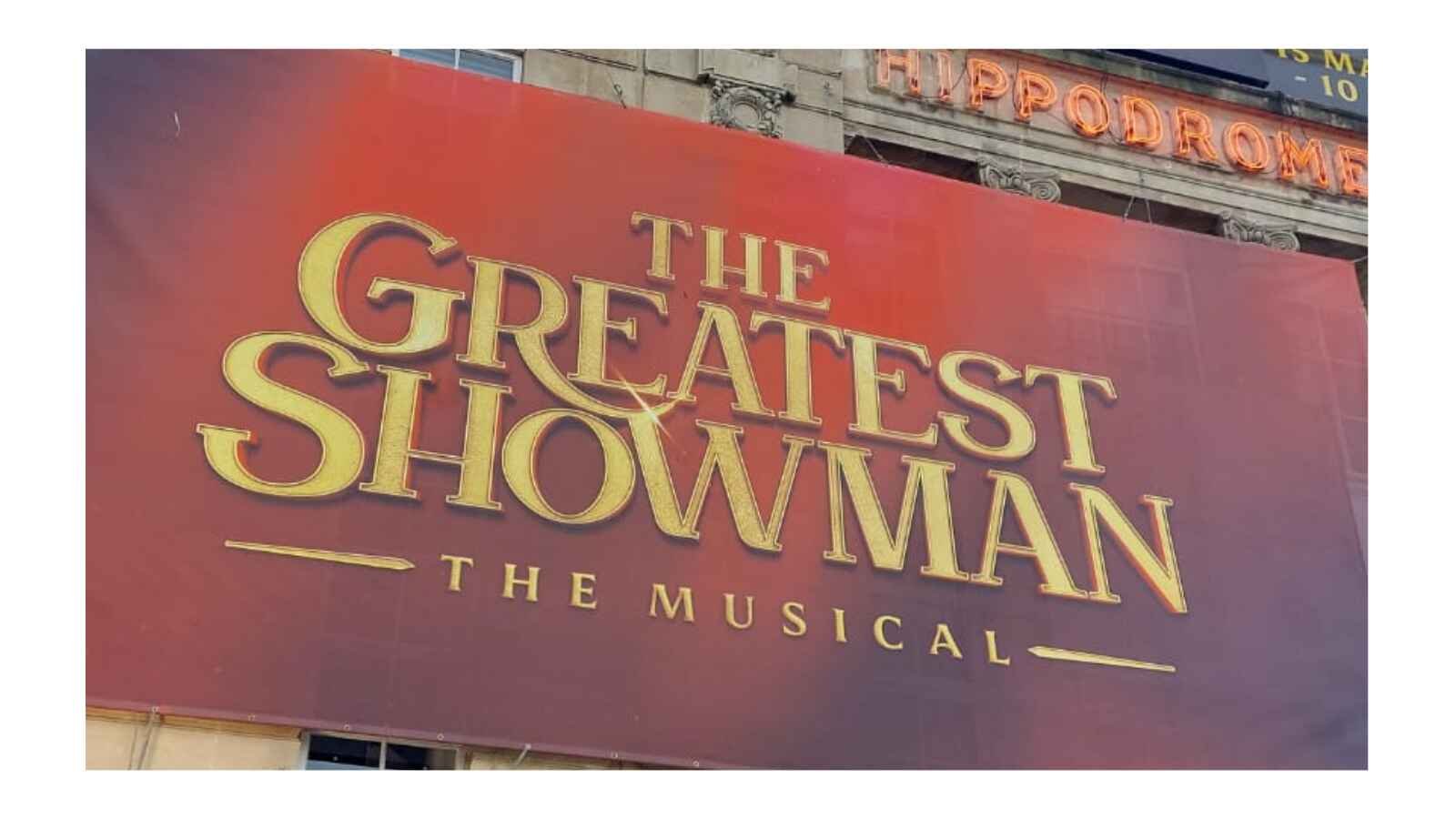
Music News Blitz writer Chloe Willis saw The Greatest Showman at the Bristol Hippodrome on Wednesday, April 23 - and answers the burning questions of fans of the film and score, as well as providing a review of the world premier.
Where and when can I see the show?
It is currently being performed at the Bristol Hippodrome until May 10, 2026, although tickets are sold out.
It is a limited performance, only running for just under two months.
There are, however, rumours that it is expected to move to the West End in London at some stage.
Are tickets expensive?
Tickets on the ATG website started from £25. I was sat in the upper circle, with tickets priced at £40pp. For seats in the stalls it would be £60+.
While tickets are sold out, if there are any last-minute cancellations, they are re-released to the public at 12pm and 4pm daily by the venue.
What is the running time of the show?
It runs for around two hours and 42 minutes, including the interval.
This is subject to change - there were some technical difficulties in our performance, so the run time was closer to three hours.
What time does the show start?
Performances are at 19:30 UK time Tuesday to Thursday, with additional matinee performances at 14:30 UK time on Wednesday, Saturday and Sunday.
Who can go to watch it?
There is an age restriction of six years old, but anyone under the age of 16 must attend with adult supervision.
Who directed the show?
Casey Nicholaw was the director and choreographer of the production. Her other work includes, but is not exclusive to, ‘The Book of Mormon’ and ‘Aladdin’.
YOU MAY ALSO LIKE: Music news: Grammy award winner Olivia Dean hits the road, Sam Fender collab in the spotlight
Who was behind the music?
Benj Pasek and Justin Paul wrote the award-winning lyrics and music for the film, including ‘This is Me’, ‘Rewrite the Stars’ and ‘Never Enough’.
What new songs are there in the stage production?
There were five new songs featured in the performance that were scattered throughout, also written by Pasek and Paul.
These include: ‘Unusual’, ‘The Dust and The Dirt’, ‘Skybound’, ‘The Show Goes On’ and ‘Undeniable’.
Who is in the cast?
Oliver Tompsett stars as P. T. Barnum alongside Samantha Barks as Charity Barnum.
Lorna Courtney plays Anne Wheeler, Ben Joyce is Phillip Carlyle, and Vajen Van Den Bosch thrills as Jenny Lind, to name but a few.
Is the show similar to the film?
Mostly, yes, although there were some slight differences:
There are some additional songs in the stage production, as detailed above.
The relationship between Anne Wheeler and Phillip Carlyle comes out of nowhere, with a surprise kiss in the first act. It also lacks much of the complexity of the film.
There features no kiss between Jenny Lind and P. T. Barnum - this is more accurate to the true story of the pair, with Lind deciding to leave the tour early due to differing perspectives over marketing, rather than unrequited love.
This is not an exhaustive list of the differences, however, but rather a few that were particularly prominent in the stage adaptation.
MORE FROM CHLOE WILLIS: Rugby analysis: A look at wounded England and their 2027 Rugby World Cup chances
When did the film come out?
The film, starring Hugh Jackman, Zac Efron, Zendaya and Rebecca Ferguson, was released on December 26, 2017 in UK cinemas.
What is it about?
It is a rags-to-riches story based in New York City in the mid-1800s - and focuses on P. T. Barnum’s dreams becoming a reality.
He wanted to share “unique” people and their talents with the world, converting an old museum into a theatre of curiosities.
It features a forbidden romance between Carlyle and Wheeler and many setbacks in the development of the business, including protesters and a fire.
Themes of acceptance, love, family, social status and racial inequality are central.
Barnum gets very much side-tracked by his aspirations of moving up the social ladder, losing sight of what really matters, until it all begins to crumble.
Is it a true story?
It is based on true events, but the story depicted in ‘The Greatest Showman’ is not entirely accurate.
Jenny Lind and P.T. Barnum are real people.
Barnum went on to start the Barnum & Bailey Circus, but not until he was in his early 60s, following a long stint in The American Museum.
However, his treatment of the “unique curiosities” as described in the show, was much more barbaric in 19th Century America.
He even went as far as purchasing and exploiting a slave for his show, a real contradiction to the acceptance shown towards the fictional African-American trapeze artist, Anne Wheeler.
Review of The Greatest Showman
The opening scene
Darkness. The stomping of feet thudded through the theatre. Coordinated with the flashing of bright white lights.
A dark figure emerged from the back of the stage, barely visible.
With the next flash of light, spotlights were directed to the red top hat resting on his head. It sparkled gloriously centre stage.
Darkness again. The stage lit up revealing an array of colour.
Circus acts hanging from suspended hoops, twisting their bodies around the metal.
Others somersaulting and jumping across the floor.
Acrobats climbing three people high to fall back and be caught by a fourth. It was a sight to behold.
There was so much going on, one could only digest elements of it at a time.
I felt quite proud of my seat selection in the upper circle, which gave us a bird’s eye view of the circus.
The opening was exactly like the film, but I wouldn’t have wanted it any other way.
Costumes and set design
This was a stand-out element of the performance, so credit to David Korins for the set design and Gregg Barnes and Sky Switser for the costume design.
The dresses of Jenny Lind particularly impressed. Starting with a white, almost bridal, piece with large ruffles from the waist down to the hem.
It gave her character a swan-like grace as she drifted across the stage, truly matching the beauty of her voice.
She also dazzled in a burgundy and nude corset-style drop waist dress for her stunning performance at Barnum’s theatre.
If her voice wasn’t enough to capture your attention, the dress was sure to draw you in.
An honourable mention in terms of the set design must go to when the protesters set alight to the theatre.
Realistic flames were thrown into the corner of the room, and smoke began to emerge.
The use of projectors allowed the fire to appear to spread further across the room. I have never seen anything quite so realistic performed live.
The use of trapdoors was also exquisitely done, allowing the changes in location to flow seamlessly, including the emergence of a table and chairs for the Barnum household.
There were some technical difficulties with the set, which slightly delayed the start of the second act and led to a pause part way through.
However, these were quickly and professionally dealt with, and did not detract from the show.
Personal favourite moments
I particularly enjoyed the scenes performed in the ‘bar’, where the use of chairs and stools incorporated into the choreography was cleverly done.
Members of the ensemble slid across the bar to catch beer bottles at different moments and perfect timing meant the execution of this was second to none.
Drinks were also passed between the ensemble and the bartender seamlessly, as Barnum spun whiskey glasses and others juggled bottles.
Barnum and Carlyle performed a tap-like number on top of the bar itself, with perfect synchronicity and character. It was thoroughly entertaining.
Another moment that stood out in the show was the performance of ‘Rewrite the Stars’.
Following a slightly disappointing use of the trapeze in Anne Wheeler’s solo number ‘Skybound’, my expectations were quite low for this section.
However, my assumptions were quickly proven wrong, with the rope and the trapeze being used to their full potential.
Both Caryle and Wheeler span around, suspended in the air, including a breath-taking moment where Anne was held by Phillip below the trapeze itself in the splits. A moment of true trust.
Truly magical!
The finale
Following the dramatic fire scene, calm had settled across the stage. Barnum had realised his mistakes in prioritising his social progression over his family and friends.
He entered the bar and all fell silent. It didn’t take long for the acts to forgive him and express their need for the show to go on, as much as his.
The stage was cleared and fell once again into darkness.
It was swiftly lit up with bright gold costumes and dancers and acrobats executing spell-binding tricks.
As the finale song came to its crescendo, large red ribbons fell from the ceiling in an arch, creating the ‘big top.’ Such ribbons also fell from the sides of the Hippodrome.
The audience were no longer just observing the story unfold - we were in it. Fully immersed in the excitement and awe of a circus.
And isn’t that what putting on the greatest show is all about - captivating your audience to the point that jaws drop and smiles spread, resting there for days.
I am still smiling now!
READ NEXT: Music news: A new era for Blossoms with new single ‘Joke About Divorce’
